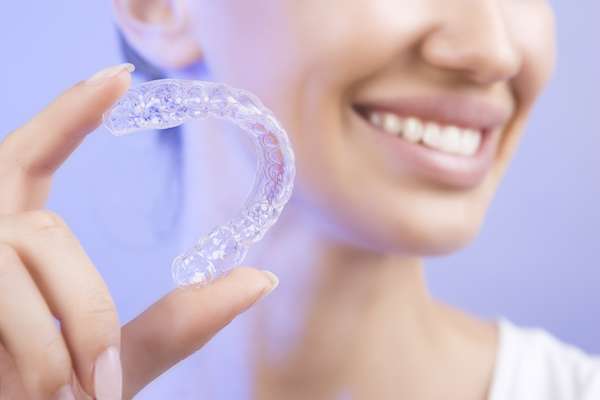
 Having crooked teeth or an improper bite can affect a person’s dental health and smile, but an Invisalign® dentist can help patients achieve a straighter smile for years to come. Before beginning, patients first have a consultation with a dentist to learn more about the process. Asking questions is important for allowing patients to feel confident going into the treatment.
Frequently asked questions regarding the Invisalign® treatment process
For patients considering Invisalign®, it can be daunting trying to decide if this is the right solution for their unique situation. Learn the answers to several common questions patients have about clear aligners.
Who is a good candidate for treatment?
Generally, Invisalign® is only recommended for older teens and adults who have the lifestyle and discipline to wear the aligners as instructed. While a good solution for many types of common alignment and bite issues, there are certain limits to what conditions this treatment option can complete. If interested, patients should consult with an Invisalign® dentist who can examine the mouth and determine if the case can be addressed with aligners.
Are Invisalign® braces noticeable?
When comparing options for addressing misalignment of the teeth, Invisalign® is one of the most inconspicuous alternatives available to patients. Unlike traditional braces that most often require metal brackets and wires to be placed on the teeth with flashy rubber bands, clear aligners fit snugly over the patient’s teeth and are hardly noticeable when worn.
Are there any eating restrictions?
One major advantage of Invisalign® is that patients can easily remove the aligners at any time, making any diet changes unnecessary. It is recommended to always take the trays out when consuming any food or beverage that is not water. Brushing and flossing the teeth after meals can help keep the trays from staining or getting sullied.
How successful is Invisalign®?
For people with treatable cases, clear aligners are often an effective means of adjusting the position of the teeth and jaw. However, the success of treatment relies heavily on how compliant the patient is with following the guidelines. Unlike regular braces that are fixed onto a person’s teeth at all times, it can be tempting to remove Invisalign® whenever the teeth are uncomfortable. Additionally, people may misplace the aligners or forget to put the trays back on after meals.
To achieve the desired results, patients must wear the aligners at least 22 hours a day. If this requirement is not met, it may take longer to complete the process or the treatment may be unsuccessful. Additionally, patients need to continue wearing a retainer at night to keep teeth from shifting once in the proper position.
Check out what others are saying about our dental services on Yelp: Invisalign Dentist in Weymouth, MA.
Conclusion
Come to your initial appointment with an Invisalign® dentist prepared with questions you want to ask, including the inquiries explored in this guide and any others about the treatment process. A productive consultation appointment facilitates realistic expectations and allows patients to understand what is required for the teeth to successfully shift into the desired position.
Request an appointment or call Dr. Frederick F. Nafash and Associates at 617-822-3400 for an appointment in our Weymouth office.
Related Posts
Full mouth restoration with dental implants can restore your smile and confidence, but this treatment isn't right for everyone.Understanding who should avoid this procedure helps you make informed decisions about your dental health and prevents unnecessary complications down the road.You may not be a good candidate for full mouth dental implants if you have uncontrolled…
You expect your dental implants to last for years. Most do, since implant success rates stay high when placed and cared for the right way. Still, problems can start small and feel easy to ignore.Early signs of dental implant failure often include ongoing pain, swelling, bleeding gums, or a loose implant, and you should not…
Tooth pain has a way of starting small and getting worse fast. What begins as mild discomfort can turn into throbbing pain that keeps you up at night.If you experience severe pain, visible swelling, bleeding that won't stop, or signs of infection like pus or fever, you may need an emergency tooth extraction to protect…