 Dental patients who are planning a visit to an implant dentist may be unfamiliar with the details regarding implants. It is crucial to learn as much information as possible before scheduling an appointment for this surgical procedure.
Important questions to ask an implant dentist
A dental implant is a common permanent tooth replacement option that can be highly beneficial to a patient’s health and happiness. The following are important questions for patients to ask an implant dentist regarding the procedure prior to treatment.
What are dental implants?
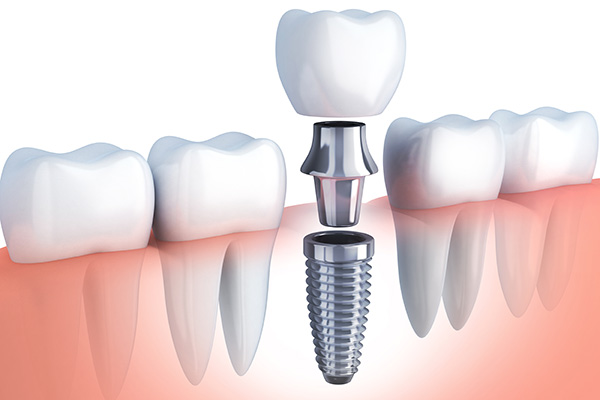
Dental implants are artificial tooth roots that are permanently placed in the jaw bone to provide a sturdy base for replacement false teeth. Implants are a treatment option for patients who are missing a tooth or multiple teeth, as well as teeth that are damaged beyond repair. They are an alternative to traditional dentures and have become an increasingly popular option in recent years.
Why are dental implants necessary?
Patients who are dealing with missing teeth need to have them replaced as soon as possible. Bone loss in the jaw happens quickly following tooth loss, which can greatly alter the appearance of the face. When a tooth is missing, the surrounding teeth begin to shift around the empty space. This shifting can result in misaligned teeth. Patients may also have difficulty with eating and speech.
What is the procedure like?
An implant dentist starts by doing a thorough exam and may take X-rays and impressions of the teeth. If there is a diseased or damaged tooth still present, it will be removed. A hole is drilled into the jawbone and the implant is placed.
Osseointegration, the process in which the bone fuses to the artificial root to make it strong and stable for the replacement tooth, then takes place over weeks or months. After the jawbone has completely healed and fused with the implant, a connector known as an abutment is placed. Finally, the replacement teeth are attached to the abutment.
What are the benefits?
Dental implants are an effective tooth replacement procedure due to the ability to stimulate bone growth in the jaw and prevent bone loss. Implants have a natural look and feel, as well as the ability to function like real teeth. Patients with dental implants are able to speak clearly and eat normally, which can lead to greater self-confidence in social settings. Compared to traditional dentures, implants do not fall out and are generally found to be more comfortable. With proper care, dental implants are long-lasting and durable.
How long is the healing process?
The total average healing time for dental implants is usually around four to six months. This is mostly due to the osseointegration process as it takes time for the bone to properly fuse to the implant.
Check out what others are saying about our dental services on Yelp: Implant Dentist in Weymouth, MA.
Conclusion
Dental implants are a wonderful tooth replacement option that provides a healthier and beautiful smile. An implant dentist can help restore a patient's smile and confidence.
Request an appointment or call Dr. Frederick F. Nafash and Associates at 617-822-3400 for an appointment in our Weymouth office.
Related Posts
Full mouth restoration with dental implants can restore your smile and confidence, but this treatment isn't right for everyone.Understanding who should avoid this procedure helps you make informed decisions about your dental health and prevents unnecessary complications down the road.You may not be a good candidate for full mouth dental implants if you have uncontrolled…
You expect your dental implants to last for years. Most do, since implant success rates stay high when placed and cared for the right way. Still, problems can start small and feel easy to ignore.Early signs of dental implant failure often include ongoing pain, swelling, bleeding gums, or a loose implant, and you should not…
Tooth pain has a way of starting small and getting worse fast. What begins as mild discomfort can turn into throbbing pain that keeps you up at night.If you experience severe pain, visible swelling, bleeding that won't stop, or signs of infection like pus or fever, you may need an emergency tooth extraction to protect…